
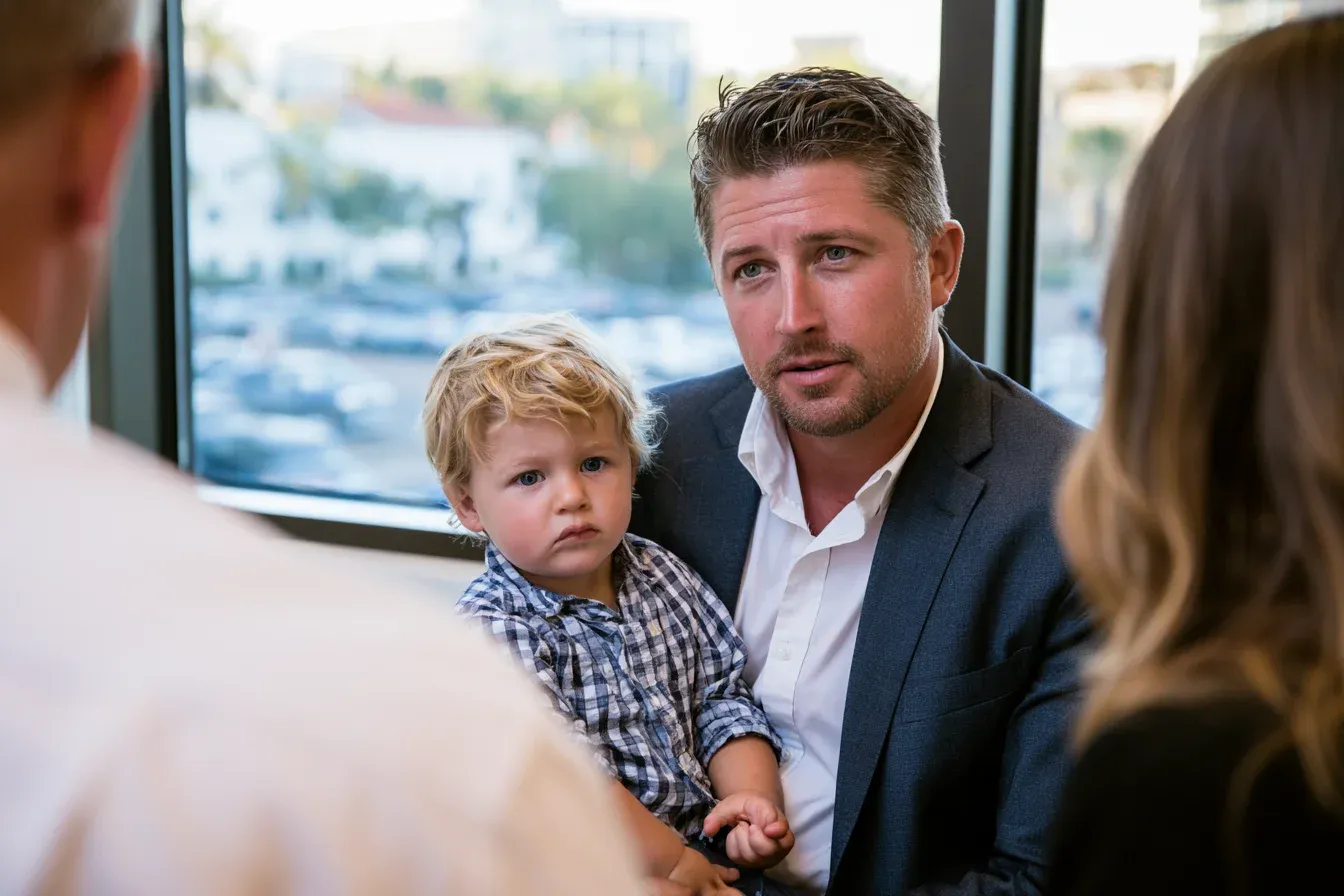
Fathers can get full custody in California by demonstrating that sole custody serves the child’s best interests. Courts do not favor either parent based on gender, what matters is your involvement, stability, and ability to meet your child’s needs. Building a strong case requires documentation, consistency, and legal strategy tailored to your specific circumstances.
Fathers who want full custody often enter the process believing the system is stacked against them. That concern is understandable, outdated assumptions about parenting roles can feel deeply embedded in family court proceedings. But California law is clear: neither parent receives preferential treatment based on gender. What courts evaluate is the child’s best interests, and a father who can demonstrate active involvement, a stable home, and a commitment to the child’s well-being has every right to pursue full custody.
The challenge is knowing how to build that case. Documentation matters. Parenting history matters. How you conduct yourself throughout the process matters. Fathers who approach custody disputes without a clear legal strategy often find themselves reacting to the other parent’s narrative instead of establishing their own. By the time the case reaches a judge, first impressions and early missteps can be difficult to overcome.
In this article, you will discover what California courts look for when awarding full custody, the steps fathers can take to strengthen their case, and how a San Diego child custody attorney can help you fight for the outcome your child deserves.
What Full Custody Means in California
California law splits custody into two separate parts, and you need to understand both before you can pursue either.
- Legal custody: Who makes major decisions about your child’s education, healthcare, and religion.
- Physical custody: Where your child lives and which parent handles daily care.
- Sole custody: One parent holds legal custody, physical custody, or both.
- Joint custody: Both parents share decision making, parenting time, or both.
When fathers ask how to get full custody, they usually mean sole legal and sole physical custody combined. Even when a father wins full custody, the court will almost always order some parenting time for the mother unless the child’s safety is at immediate risk.
Can a Father Get Full Custody in California?
Yes. A father can get full custody in California, and you do not need to prove abuse to do it. California courts apply the best interest of the child standard, which looks at the full picture of each parent’s ability to care for the child.
Fathers and mothers have equal legal standing under the California Family Code. The law does not favor mothers. What the court favors is the parent who provides stability, consistency, and a safe home environment for the child.
When a Judge Will Grant a Father Full Custody
Judges look at real world facts when deciding whether to award sole custody to a father. You do not need every factor on this list to apply to your situation. Even one well documented issue, combined with proof that you are the more stable parent, can support a strong case.
Common reasons a judge grants full custody to a father include:
- Documented domestic violence or child abuse by the other parent
- Ongoing substance abuse that affects the child’s safety
- Severe mental health issues that interfere with the other parent’s ability to care for the child
- Abandonment or a long term pattern of uninvolvement
- Frequent moves or instability that disrupts the child’s school and home life
- A pattern of the other parent interfering with your relationship with the child
- You already serve as the primary caregiver and the child is thriving in your care
How California Judges Decide What Is Best for Your Child
San Diego judges follow California Family Code 3011 to evaluate what is best for your child. Every factor in this standard connects directly to the child’s day to day life.
- Health, safety, and welfare: The court’s first priority is whether your child is physically safe and emotionally healthy.
- History of abuse: Any documented abuse by either parent is taken seriously and weighed heavily.
- Contact with each parent: Judges look at which parent has been consistently present and involved.
- Substance abuse: Habitual drug or alcohol use by either parent is a significant red flag for the court.
- Community ties: The child’s connection to their school, neighborhood, and extended family matters.
San Diego judges also pay close attention to which parent supports a healthy relationship between the child and the other parent. Showing the court that you encourage that relationship, rather than undermine it, strengthens your case.
Step by Step: How to Pursue Full Custody in San Diego County
Step 1: Document Your Daily Parenting
Start a parenting journal right now. Write down every drop off, pick up, meal, homework session, doctor visit, and activity you handle. Save every text message and email that shows your involvement in your child’s life.
Step 2: Establish Legal Parentage if You Were Not Married
If you were not married to the mother when your child was born, you must legally establish parentage before the court will grant you any custody rights. You can do this through a Voluntary Declaration of Parentage or by filing a parentage case in San Diego Superior Court.
Step 3: File a Request for Order
A Request for Order is the formal document you file to ask the court for custody and parenting time. You file this at the San Diego Superior Court family law division. We handle the filing and service for our clients so you can stay focused on your child.
Step 4: Get Temporary Orders in Place Early
Temporary orders set your parenting schedule while the case moves through the court. These early orders often shape the final outcome, so locking in a strong schedule from the start matters. If your child is already primarily in your care, we work to document and preserve that arrangement immediately.
Step 5: Attend Family Court Services
Family Court Services is San Diego’s court-connected mediation program for custody disputes. In San Diego County, the counselor assigned to your case can make a formal recommendation to the judge. You need to come prepared with a clear parenting plan and specific, documented concerns.
Step 6: Build Your Evidence
Strong evidence is what separates a well prepared case from one that falls apart. Gather school records, medical records, your parenting journal, and photos that show your home environment. Collect written declarations from teachers, coaches, pediatricians, and family members who have witnessed you parent.
Step 7: Present Your Case at the Hearing
At your hearing, the judge will review your evidence and hear testimony from both sides. We keep the focus on your child’s needs and your ability to meet them, which is exactly what the court wants to see.
Step 8: Follow Your Orders and Track Violations
Once orders are in place, follow them exactly and on time. Keep a written log of any violations by the other parent, including missed exchanges or denied parenting time. This record protects you and creates the foundation for enforcement if needed.
Evidence That Strengthens Your Custody Case
San Diego judges respond to organized, child focused evidence. We help you collect and present it in a format the court takes seriously.
“This firm is professional and highly competent. My daughter and I engaged this firm to help in a paternity case. Julia got my daughter full legal and physical custody and the visitation schedule my daughter requested. She guided my daughter through the entire mediation/court process.” – Mary S.
A pattern we consistently see in San Diego full custody cases is that fathers who keep a simple written log, even something as basic as a notes app entry after every pickup and doctor visit at Rady Children’s Hospital, walk into Family Court Services mediation with far more credibility than fathers relying on memory alone. Judges at the San Diego Superior Court family law division respond to specifics, not general claims of involvement.
| What You Want to Prove | Strongest Evidence |
| You are the primary caregiver | Parenting journal, school sign in records, medical visit logs |
| Your home is stable and safe | Lease or deed, photos of child’s room, consistent work schedule |
| The other parent puts the child at risk | Police reports, CPS records, text messages, witness statements |
| You support the child’s relationship with the other parent | Exchange logs, calendars, respectful written communications |
Mistakes That Hurt Fathers in Custody Cases
Many fathers lose ground not in the courtroom but in the weeks and months leading up to it. We can build the strongest possible case for you, but you need to avoid these mistakes outside of court.
- Sending angry or hostile messages to the other parent
- Posting about the case, the mother, or your personal life on social media
- Arriving late to or skipping parenting exchanges
- Keeping the child from the other parent without a court order
- Speaking negatively about the mother in front of your child
- Ignoring existing custody or child support orders
Every one of these behaviors can be used against you by the other side.
Timeline and Cost for Full Custody Cases in San Diego
Temporary orders typically come within a few weeks of filing your Request for Order. A contested custody trial can take several months from the initial filing to a final judgment.
Costs increase when the other parent is uncooperative, when a custody evaluation is ordered, or when expert witnesses are needed. Reaching an agreement through Family Court Services is almost always faster and less expensive than going to trial.
One of the most important things to understand is that delay almost always benefits the parent who currently spends the most time with the child. Acting quickly is a strategic decision, not just an emotional one.
What we see across the contested custody cases we handle in San Diego is that delay almost always favors whichever parent currently has the child during the school week, whether that is in Clairemont, Rancho Peñasquitos, or anywhere else in the county. Fathers who wait months to file a Request for Order after a separation often find the court reluctant to disturb an arrangement that has already become the status quo.
Why Fathers Choose Garwood Reeves
You need a legal team that understands father’s rights and knows how San Diego family courts operate. Garwood Reeves brings both.
- Certified Family Law Specialists: Both Julia Garwood and Casey Reeves hold the Certified Family Law Specialist designation from the State Bar of California. You get focused expertise, not a general practitioner learning on your case.
- Judicial perspective: Julia Garwood served as a Settlement Judge in San Diego County Family Law Courts. We know how local judges think and what they look for in custody cases.
- Trial ready representation: We negotiate when it serves your child and litigate aggressively when the other side refuses to be reasonable.
- 70 years of combined experience: You get the full strategic depth of our team behind your case, not just one attorney working alone.
We handle the legal process so you can stay present for your child.
“Julia is a competent and objective professional family law attorney who provides sound and consistent counsel. She is supported by a strong legal team who were impressively responsive to me. Julia always ensured I was aware of the potential downside of each issue we reviewed.
She strikes the right balance between taking assertive positions and the legal cost of those decisions so that I could exercise appropriate judgment on each issue.
I found this approach to be quite unique and it ensured I reached a highly satisfactory divorce settlement. I highly recommend Julia to be your family law attorney.” – San Diego Father, former client
Talk to a San Diego Father’s Rights Attorney Today
If you are worried about losing time with your child or unsure where to begin, we can help you find a clear path forward. Garwood Reeves offers a confidential consultation to review your situation, assess your options, and outline your immediate next steps. Call us today at (619) 679-9080 to protect your role in your child’s life.
Frequently Asked Questions
What Are the Chances a Father Gets Full Custody in California?
There are no published statewide statistics on this outcome, but fathers who document consistent caregiving, a stable home, and the other parent’s risk factors have a genuine and increasing chance of winning sole custody in California.
Can My Child Choose to Live With Me Full Time?
California Family Code 3042 gives a child who is 14 or older the right to address the court directly about custody preferences, but the judge still makes the final decision based on the child’s best interest.
Will the Mother Still Get Visitation if I Win Full Custody?
In most cases yes, because California courts favor ongoing contact with both parents. Visitation can be supervised or restricted when there is a documented safety concern.
Can I Request Emergency Custody Orders in San Diego?
You can file for emergency orders, called ex parte orders, when your child faces an immediate risk of harm. A San Diego judge can issue temporary emergency orders within approximately 24 hours of a properly filed request.
Do I Need to Establish Paternity Before I Can File for Custody?
If you were not married to the mother, yes. You must establish legal parentage before the court will consider any custody or parenting time request you make.
Will My Child Support Obligation Change if I Get Full Custody?
In most cases, the parent with less parenting time pays child support based on California’s guideline formula. A father who wins full custody typically receives support rather than pays it.
Can I Move With My Child if I Have Sole Physical Custody?
Sole physical custody gives you more flexibility to relocate, but the other parent can ask the court to block the move. You may still need court permission or be required to provide formal notice before relocating.